




The virtues of plants
A new definition of color.
The virtues of plants: natural make-up with coloring plants
Color above all else
If there's one element that cosmetic manufacturers focus on, it's color. Smoky eyes, crimson or vermillion lips, nude or pop styles: there's something for every taste and every occasion. But do brands use healthy and environmentally friendly methods to obtain this wide range of colors? Nothing is less certain. What if there was another way to enhance your beauty while taking care of your skin and body? Let nature speak for itself...
"In ancient China, women blackened their eyebrows and added blue minerals. They also applied extracts of red and blue flowers and leaves to their eyelids and lips." Le Rouge Français
Make-up through the centuries, or how to appropriate colors
A complex system
Whether it's to magnify your eyes, your mouth or your hands, manufacturers have to develop a complex system to extract color, preserve it, make it easy to apply and finally make it last on your skin or nails. Added to this is a desire to complement these shades with particular reflections or finishes: opaque, glossy, pearly, glittery, etc. There are many ways, more or less effective and developed since the beginning of humanity, to obtain these elements.
The development of colored beauty products
First of all, the requirements of make-up do not allow the use of water-soluble or oil-soluble dyes or colorants, as is the case in shower gels or creams. These are not opaque or covering enough. This is why women, and men too, have been using mineral, plant or animal pigments for millennia. They ground or prepared a decoction from raw materials such as ochre, malachite, galena, algae or cochineal. Then, they mixed them with a binder, such as resin, wax, oils or fats, so that the pigments would agglutinate and adhere to the skin or nails. So, since the dawn of time, colored beauty products have been composed of at least pigments and fatty substances. They may be accompanied by stabilizers, preservatives, UV filters, perfumes, etc.
The history of cosmetic pigmentation
Archaeological research and archives show us that pigments have been used to adorn the body since prehistory. The Egyptians had a very advanced knowledge of their environment and exploited it to create a wide range of shades. They applied kohl around their eyes to protect them from light and to heal them, as well as green and black eye shadow. Their nails, meanwhile, were colored with henna. Their facial skin was whitened with plaster, chalk or lead carbonate, and highlighted with blush and lipstick. In ancient China, women blackened their eyebrows and added blue minerals. They also applied extracts of red and blue flowers and leaves to their eyelids and lips. Greek and Roman women, whose faces had to be very pale, used mineral powders to enhance their eyelids. Then, after an austere Middle Ages, carmine lipstick was successful on an almost white foundation. In the 20th century, the development of the chemical industry led to the creation of synthetic pigments, as colors were brighter, more covering and the process was less expensive. They now represent more than 95% of the colorants in make-up products. The use of micas, mineral or synthetic, has also become widespread to give an opaque, pearly, glittery or shiny appearance to eye shadows or lipsticks.
Hydrocarbons and toxic substances on our skin?
The expansion of the petrochemical industry
The democratization of make-up in the 20th century, the advent of the global economy and the emergence of large groups such as Guerlain with the first stick lipstick, Maybelline with the first mascara or Revlon with the first nail polish, required mass production. Two trends then emerged: one whose objective was to offer the largest number of people a wide variety of goods at a competitive price, and one that offered high-end products that told a story and made us elegant. In both cases, manufacturers relied on the expansion of the petrochemical industry and large-scale mining, both in the manufacturing process and in the substances and containers.
The predominance of the petrochemical industry in the development of cosmetic pigments
Why is the link, at first glance antinomic, so strong between the make-up and oil industries? To begin with, pigments themselves can be chemically created in the laboratory from hydrocarbons: this process is simple and economical. Then, the oils or waxes that facilitate the distribution of the pigment and give the product its type of consistency, such as paraffin, microcrystalline waxes or ozokerite, are hydrocarbon derivatives. Many additives are also derived from petroleum, such as isododecane for long-lasting and waterproof make-up, or parabens and phenoxyethanol for preservation. Finally, the glossy finish is generally obtained using paraffin oil, which is also a petroleum residue. Synthetic pigments usually imitate natural organic pigments. They are composed of complex molecules with at least one carbon atom. We find lakes, which are insoluble dyes. Products such as micas, quartz or mineral pigments like titanium oxide are added to make them stable and allow them to adhere to the skin. However, these techniques have drawbacks. The first, and not least, concerns health. Indeed, certain petrochemical substances are carcinogenic, disrupt the hormonal system and can cause allergies or irritations. Moreover, these are fossil materials that do not renew themselves. In addition to being unsustainable, the extraction process is extremely polluting, as are the discharges it causes.
The ambivalence of natural mineral pigments
In view of the many disadvantages and consumers' growing awareness of cosmetic pigments, brands are increasingly offering natural alternatives. Among these are mineral pigments, also known as inorganic pigments. These are metal oxides present in soils. They are very covering and do not come from hydrocarbons. This is why most organic cosmetic labels approve them. In the arsenal of authorized mineral pigments, we find oxides of: Iron for yellow, red, brown, blue or black colors; Chromium for greens; Titanium and zinc for whites. However, the use of mineral pigments does not ultimately prove to be a flawless solution. First of all, they can contain heavy metals. Untreated, they contain impurities present in the environment from which they were extracted. However, beyond a certain threshold, lead, cadmium, arsenic or mercury are carcinogenic. This can be all the more dangerous for lipsticks, since mucous membranes absorb substances more easily and the risk of ingestion is higher. As for titanium dioxide, it is also suspected of being carcinogenic when it takes the form of nanoparticles. It is used both as a white pigment and as a sunscreen in organic products. "Natural" therefore does not necessarily mean healthy. The term "organic", on the other hand, concerns products from organic farming. While the general idea extends to ecology and attention to living beings and biodiversity, it is still necessary to take into account the problems raised by researchers and to avoid the pitfalls of greenwashing. To remedy this state of affairs, is there a real alternative to synthetic pigments? This is what Le Rouge Français is striving to demonstrate.
The chromatic revolution of plant pigments
Organic plant pigments are usually little used in cosmetics because they have low coverage and do not keep as well. However, with current technologies, wouldn't it be possible to strengthen the adherence of pigments to the skin and make them more effective?
Biotechnology at the service of your health and nature
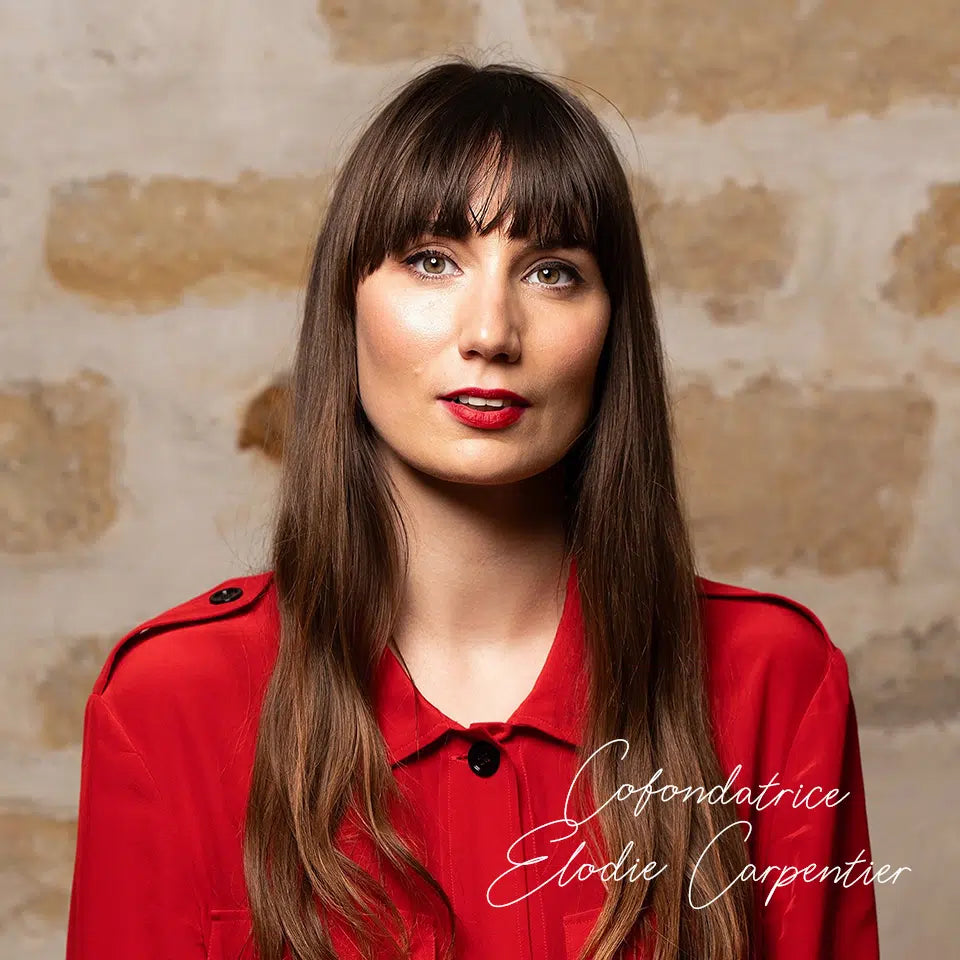
Color research was carried out by L'Oréal concerning hair products, but nothing had been undertaken in cosmetics until 2018, when Le Rouge Français was created. Elodie Carpentier, co-founder of the brand and a biotechnological engineer, decided to put her knowledge and skills to good use to finally be able to offer all women healthy and eco-responsible make-up. Plant pigments have exceptional coloring properties that it would indeed be a shame to miss:
Madder is the star of Le Rouge Français lipsticks. It is a root known since Antiquity. France was a major production center for this root until the 19th century.
Annatto produces a yellow-orange color. It comes from a shrub cultivated in South America that people consume as a drink and use for dyeing and basketry.
Sappanwood, a Brazilian red wood.
Sacred lotus renowned in Japan and Korea as a dye and herbal tea.
Hibiscus, or Hawaiian karkadé.
Tomato lycopene. Traditionally applied to the face by Hungarian women, this pigment also slows down aging and is anti-UV.
Damask rose which usually dyes silk.
Corsican chestnut beige-brown, antioxidant and rich in vitamins.
Red radish: its intense color is perfect for both make-up and nail polish.
Alkanet.
Sweet potato.
Purple corn, etc.
The process that the cosmetic house Le Rouge Français has put in place is unique and patented. It was also awarded at the Cosm'Ethique de Cosmebio competition in 2019. Depending on the plants, it consists of grinding or making infusions by enzymatic extraction, i.e. without solvent, with minimal transformation.
When “colors” rhyme with “values”
Thus, not only do plants adorn us with their most shimmering colors, but they also bring unique benefits that Le Rouge Français strives to provide you with, while respecting nature.
Plants indeed have protective virtues for the skin: they repair it, hydrate it and slow down its aging. To fully benefit from these advantages, the start-up promotes the use of the plant's totum. This means that transformations are limited so that the active ingredients continue to act together and develop their full potential.
Because taking care of our health also means protecting our environment by reducing pollution, all means at our disposal must be used to achieve this. This is the philosophy of Le Rouge Français, which does not use substances derived from hydrocarbons and whose plants are grown organically.
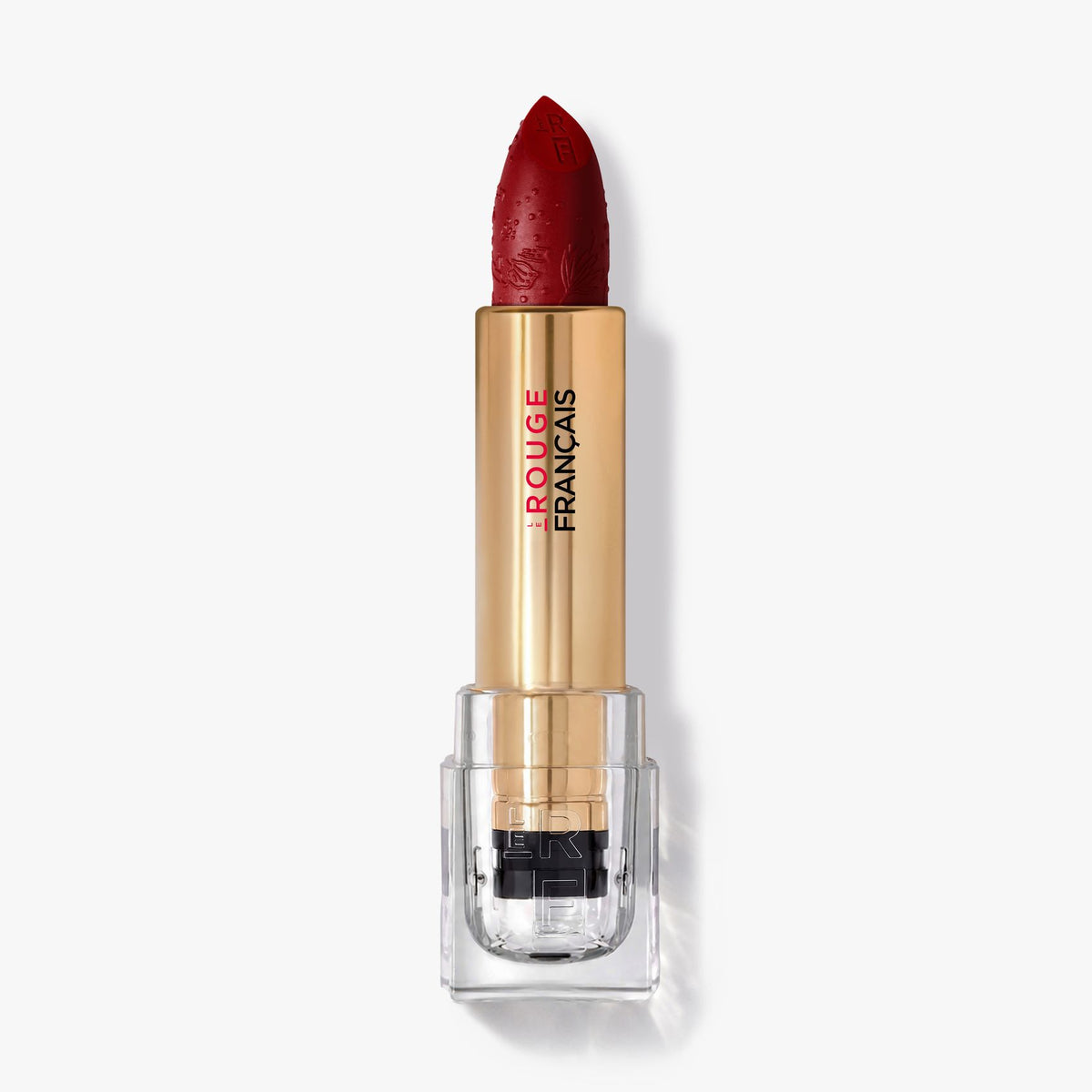
In addition, the brand is working to make the packaging as ecological as possible with a transparent, refillable and bio-sourced tube, i.e. made from natural raw materials. Indeed, it is not conceivable to use plastic when we know the damage it causes in the oceans. This is why it makes a point of supporting innovation in this fundamental area.
Let's add that only French and endemic plants are used. Indeed, plants that grow in their original environment are more resistant to diseases and insects, which avoids treating them. Take, for example, madder and indigo in Charente-Maritime, annatto cultivated in South America and Sri Lanka, or the Corsican chestnut.
In addition, let us note the attention paid to the life and work of each population through the ethics of fair trade, but also to animals. None of Le Rouge Français products contain fat, beeswax, insects such as cochineal or leather. Fatty substances are replaced by vegetable oils or waxes such as rice, candellila and carnauba. The sheaths, for their part, come from agri-food residues, such as apple remains, which, thanks to the expertise of Le Rouge Français, become luxurious pieces. Moreover, no product is tested on animals, as evidenced by the vegan and cruelty-free labels. To top it all off, Le Rouge Français collaborates with NGOs like Yagas, which plants a mangrove with each order and supports the local economy of Sumatra in Indonesia.
Although used for millennia, plants still have many secrets to reveal to us. Awareness is evolving and brands like Le Rouge Français have understood this. They are both the key to our beauty, our well-being and remind us of our unbreakable link to nature.
Read more

The effortless chic of Inès de la Fressange, the independence and boldness of Coco Chanel, the freedom and positive sensuality of Brigitte Bardot, the androgynous simplicity of Jane Birkin... all t...

Scientific research into the ingredients in our beauty products is growing, and all studies conclude on the presence of heavy metals, synthetic materials, petrochemical derivatives, and products fr...